
Fire ants are becoming an increasing concern across parts of Queensland, including areas around Brisbane. These aggressive invasive pests are known for their painful stings, rapid spread, and ability to damage the environment, wildlife, and even infrastructure. Because of this, reporting suspected fire ant activity as early as possible plays a major role in helping stop infestations from spreading further especially in areas already requiring professional fire ant control.
If you’ve spotted suspicious ants around your property, workplace, or local park, knowing what to do next can make a real difference.
In this guide, we’ll walk you through how to identify fire ants, how to report them in Brisbane, and why acting quickly matters.
Why Fire Ants Are a Serious Problem in Brisbane
Fire ants are not like ordinary household ants. They are highly aggressive and can attack in large numbers when disturbed. Their stings are painful and may cause severe allergic reactions in some people and animals.
Beyond the health risks, fire ants can also:
- Damage lawns, gardens, and agricultural land.
- Harm pets and native wildlife
- Create unsafe outdoor areas for children and families
- Damage electrical equipment and infrastructure
- Spread rapidly if left untreated
Queensland has been actively managing fire ant outbreaks for years, but new infestations can still appear through soil movement, landscaping materials, or undetected nests.
This is why community reporting is so important. The earlier fire ants are identified and treated, the better the chances of preventing widespread infestations.
How to Identify Fire Ants
Before reporting fire ants, it helps to understand what fire ants look like and how to identify their nests correctly.
Fire ants are typically:
- Reddish-brown in colour
- Small in size, usually between 2mm and 6mm
- Found in large numbers
- Extremely aggressive when their nest is disturbed
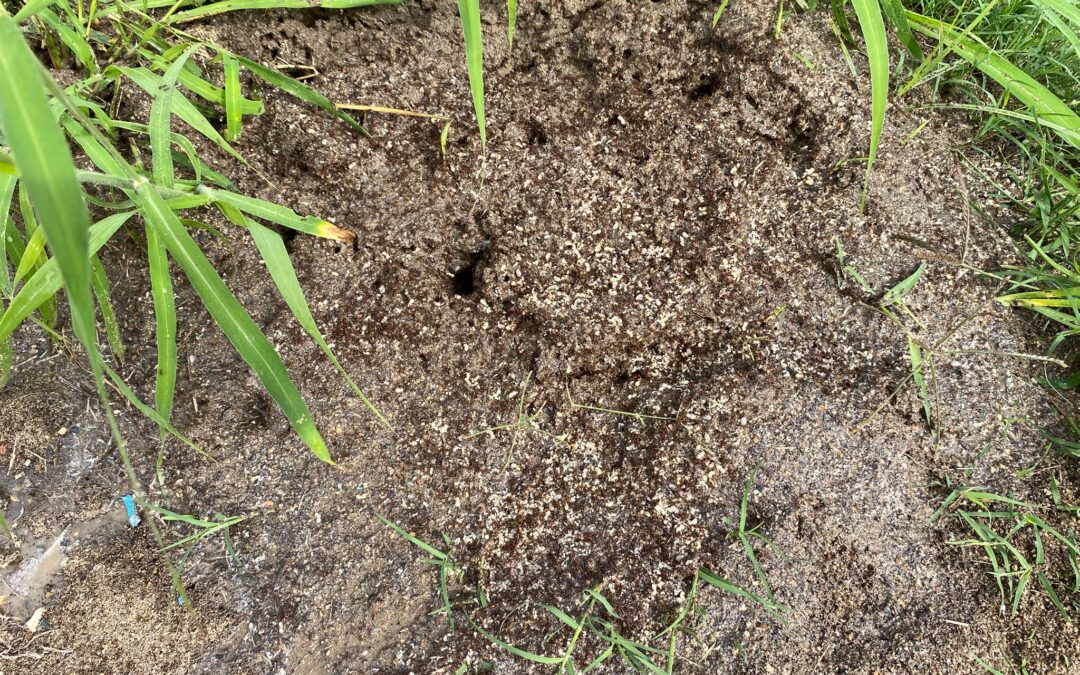
One of the most noticeable signs is their mound-shaped nests. Fire ant mounds are usually:
- Loose and fluffy in appearance
- Dome-shaped
- Found in open sunny areas like lawns, parks, footpaths, gardens, and vacant land
- Often without a visible entry hole on top
If disturbed, fire ants tend to swarm aggressively and climb vertical surfaces quickly.
It’s important not to touch or disturb suspected nests too much, as this may trigger attacks. To learn more about identifying fire ants and recognising common warning signs, explore our guide on how to identify fire ants and what they look like.
Common Places Fire Ants Are Found
In Brisbane and surrounding areas, fire ants are commonly discovered in:
- Residential lawns and gardens
- Construction sites and development areas
- Sporting fields and playgrounds
- Parks and recreational areas.
- Rural and agricultural properties.
- Newly landscaped properties
- Soil piles, turf deliveries, and mulch stockpiles
Properties that regularly move soil, turf, mulch, or landscaping materials may face a higher risk of accidentally spreading fire ants between locations. This is especially important for construction companies, landscapers, rural property owners, and homeowners undertaking major garden or earthworks projects.
Residential properties with ongoing infestations may benefit from professional residential fire ant services, particularly when nests are discovered in lawns, gardens, or outdoor entertaining areas. Construction and development sites may also require specialised fire ant management due to frequent soil movement and machinery activity.
Public spaces such as sporting fields, playgrounds, and parks can become high-risk areas if infestations are left untreated, while larger rural properties may require ongoing monitoring to help reduce the risk of fire ants spreading across agricultural land.
What to Do If You Suspect Fire Ants
If you think you’ve found fire ants, avoid disturbing the nest further. Do not attempt to move soil, spray random chemicals, or transport materials from the area.
Instead, follow these steps:
1. Take Clear Photos
If it’s safe to do so, take close-up photos of:
- The ants
- The nest or mound
- The surrounding area
Photos can help professionals and authorities identify whether the ants are likely to be fire ants.
2. Mark the Location
Make a note of the exact location of the suspected nest.
Useful details include:
- Street address
- Nearby landmarks
- GPS location if possible
- Approximate size and number of nests
3. Avoid Spreading Materials
Do not move:
- Soil
- Mulch
- Turf
- Potted plants
- Garden waste
Fire ants can spread very easily through contaminated materials.
4. Report It Immediately
The next step is reporting the sighting through the appropriate channels.
How to Report Fire Ants in Brisbane
Residents in Brisbane can report suspected fire ants directly to the National Fire Ant Eradication Program.
There are several ways to report a sighting.
Online Reporting
The quickest option is submitting a report online through the official fire ant reporting system.
You’ll usually be asked to provide:
- Your contact details
- Location information
- Photos of the ants or nest
- Additional notes about the sighting
Phone Reporting
You can also report fire ants by phone if you prefer speaking directly with a representative.
This is often useful for urgent situations or if you need guidance on what to do next.
Through Pest Control Professionals
Licensed pest control specialists experienced in fire ant management can also help identify suspected infestations and guide you through the reporting process.
Professional assistance can be especially helpful for:
- Commercial properties
- Large outdoor areas
- Construction sites
- Schools and childcare centres
- Rural properties
Why Early Reporting Matters
One fire ant nest can contain hundreds of thousands of ants. Colonies can spread quickly and establish multiple new nests nearby.
Delaying a report may allow infestations to:
- Expand into neighbouring properties
- Spread through landscaping work or soil movement
- Become more expensive and difficult to control
- Increase risks to pets, wildlife, and people
Early detection gives authorities and pest professionals a better chance of containing infestations before they become widespread.
Should You Treat Fire Ants Yourself?
Many people are tempted to use supermarket insect sprays or DIY treatments when they spot suspicious ants. However, treating fire ants incorrectly can sometimes worsen the problem.
Improper treatment may:
- Cause colonies to split and spread
- Push ants deeper underground
- Make identification harder
- Delay professional eradication efforts
Because fire ants are a regulated invasive species in Queensland, professional treatment and reporting are strongly recommended.
If you’re unsure whether you’re dealing with fire ants or another ant species, it’s best to seek professional advice rather than guessing.
How Professional Fire Ant Control Helps
Professional fire ant specialists use targeted methods for fire ant identification and eradication to help manage infestations safely and effectively.
Depending on the situation, this may include:
- Property inspections
- Nest identification
- Baiting treatments
- Monitoring programs
- Ongoing management plans
- Advice on preventing future spread
Professionals can also help businesses and property owners meet biosecurity responsibilities when handling soil or landscaping materials.
Tips to Help Prevent Fire Ant Spread
While reporting is essential, prevention also plays an important role.
To reduce the risk of spreading fire ants:
- Inspect soil, mulch, and turf before moving them
- Be cautious with landscaping materials from affected areas
- Regularly check lawns and gardens for unusual ant mounds
- Report suspicious nests early
- Work with licensed professionals if you suspect an infestation
Construction companies, landscapers, and property managers should be especially careful when transporting soil or machinery between sites. Construction sites and development areas are also considered higher-risk environments due to regular soil disturbance and machinery movement, making construction site fire ant management especially important.
Final Thoughts
Fire ants are a serious threat to Brisbane communities, properties, and the environment. Quick action and early reporting are some of the most effective ways to help stop their spread.
If you notice suspicious ant activity or unusual mounds around your property, avoid disturbing the area and report it as soon as possible.
Whether you’re a homeowner, business owner, landscaper, or property manager, staying alert and acting early can help protect both your property and the wider community.
At The Fire Ant Guys, we help homeowners, businesses, construction sites, and rural properties across Queensland with professional fire ant identification, inspections, and management services. If you suspect fire ants on your property or want expert advice on treatment and prevention, contact our team to learn how we can help.