
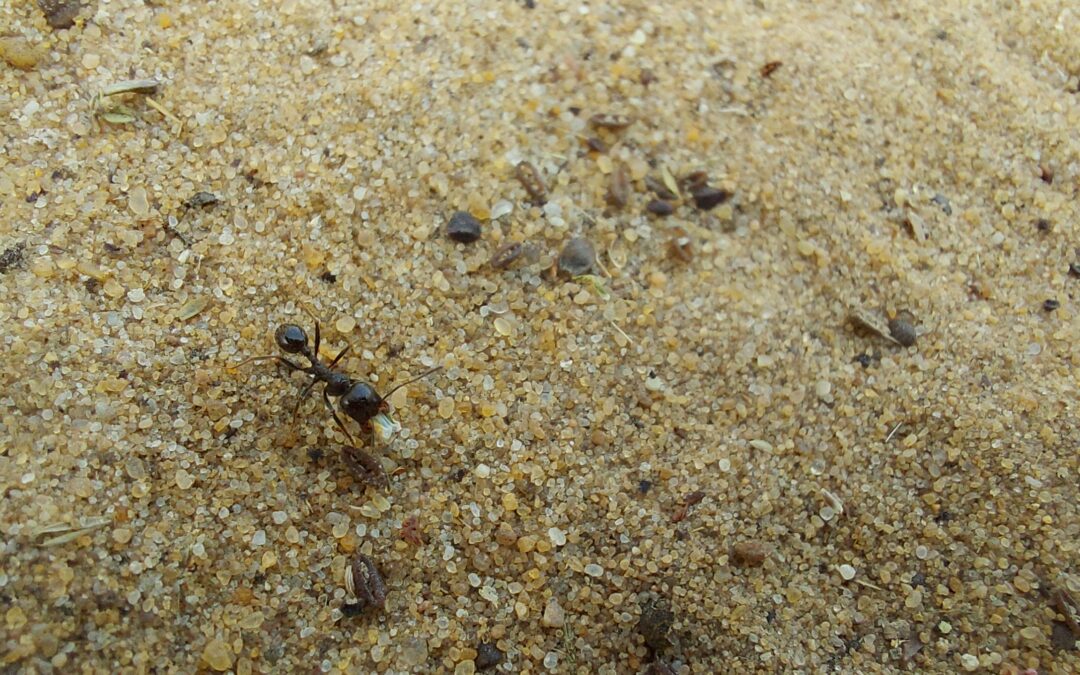
If you’ve noticed ants around your home, garden or workplace, you might be wondering whether they’re just common black ants or something more serious.
While black ants are one of the most common household pests in Australia, fire ants are a very different story. They’re an invasive pest that can sting repeatedly, spread quickly and pose a real risk to people, pets and the environment.
The good news is that there are several ways to tell them apart. Knowing what to look for can help you act quickly if you suspect you’ve found fire ants.
Why It Matters
Not every ant you see is a fire ant. In fact, most ants found around Queensland homes are harmless native or introduced species.
However, because fire ants are now established in parts of South East Queensland, it’s important not to ignore unusual ant activity or nests.
Correct identification helps:
- Protect your family and pets from painful stings
- Prevent fire ants from spreading to other areas
- Ensure infestations are treated correctly
- Avoid mistaking harmless ants for fire ants
If you’re unsure, it’s always worth getting a professional opinion through our Fire Ant Identification and Eradication service.
What Do Fire Ants Look Like?
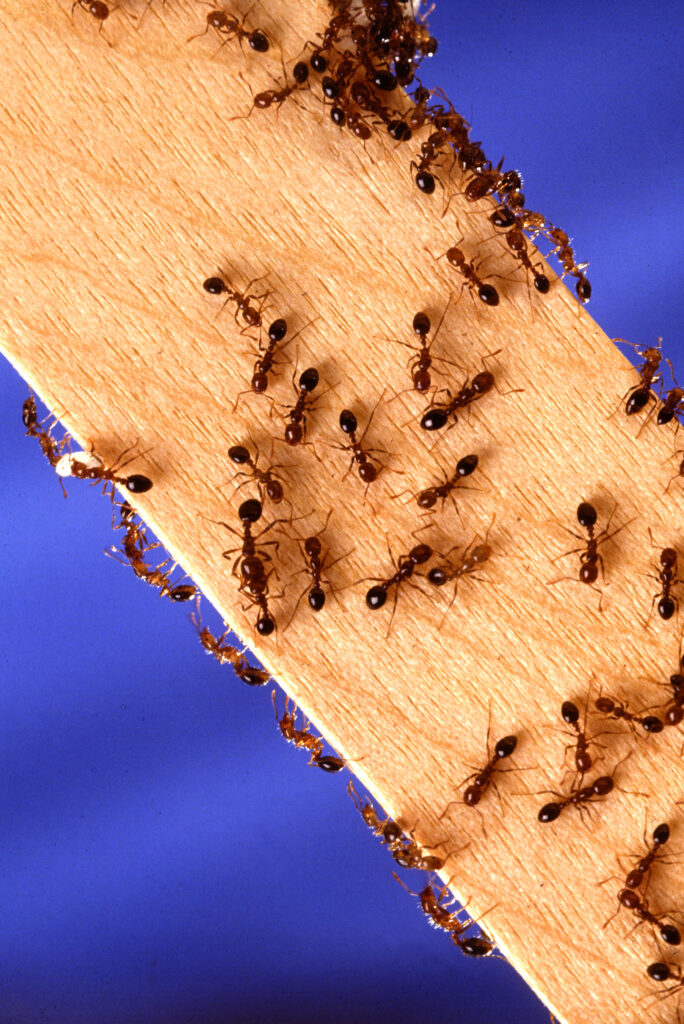
Fire ant colony. Photo by Scott Bauer, USDA Agricultural Research Service (Image No. K5388-1). Public domain via Wikimedia Commons.
Fire ants are usually reddish-brown with a darker abdomen. One of the easiest ways to identify them is by looking at the different sizes of ants within the same nest.
Unlike many common ant species, a single fire ant colony contains workers ranging from around 2 mm up to 6 mm long.
You might notice:
- Small and larger ants travelling together
- A reddish-brown body
- A darker tail section (abdomen)
- Fast-moving workers around the nest
Colour alone isn’t enough to confirm they’re fire ants, but it’s one of several clues.
For a more detailed guide with photos, read our article on How to Identify Fire Ants.
What Do Black Ants Look Like?
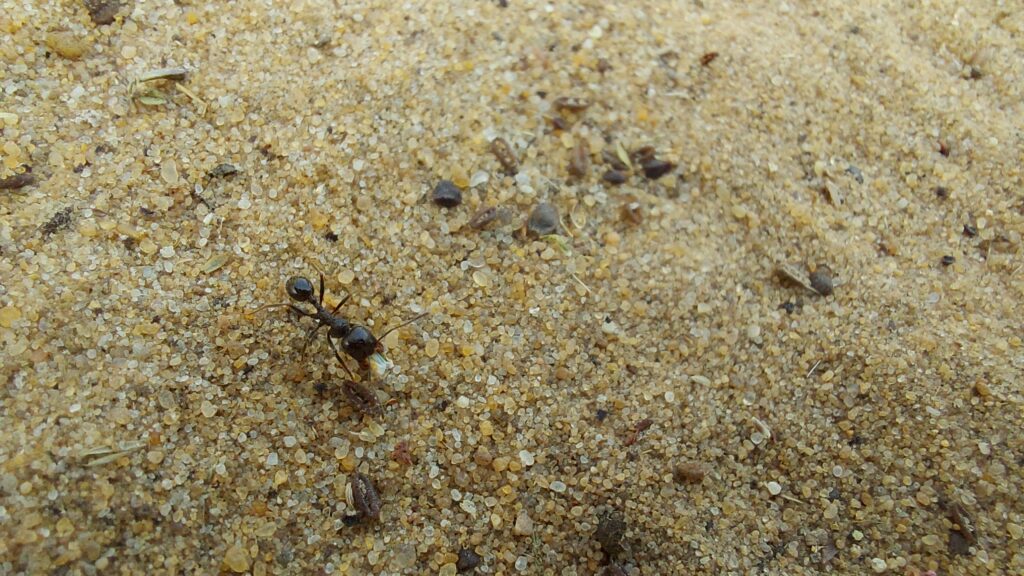
Black ant. Photo by Ivis uwu via Wikimedia Commons. Licensed under CC BY-SA 4.0.
Most black ants found around homes are exactly what their name suggests: black or very dark brown.
They also tend to be much more uniform in size. If you look closely, most workers in the colony will appear almost identical.
Black ants generally have:
- Dark black or brown colouring
- Similar-sized workers
- A slimmer body shape
- Less aggressive behaviour
They’re commonly found around kitchens, patios, gardens and pathways as they search for food.
Fire Ant Behaviour vs Black Ant Behaviour
One of the biggest differences isn’t how they look. It’s how they behave.
Fire Ants
Fire ants are extremely defensive.
If their nest is disturbed, hundreds of workers can rush out in seconds. They’ll climb onto shoes, legs or gardening equipment before delivering multiple painful stings.
Even something as simple as mowing the lawn or moving soil can trigger an attack.
Black Ants
Black ants are much less aggressive.
When disturbed, they’ll usually scatter and try to escape rather than defend the nest.
Some species may bite if handled directly, but they don’t typically swarm people or deliver repeated stings like fire ants.
Comparing Fire Ant Nests and Black Ant Nests
The nest itself often provides another useful clue.
Fire Ant Nests
Fire ants build loose soil mounds that often have no obvious entrance hole on top.
You’ll commonly find them:
- In lawns
- Garden beds
- Parks
- Sports fields
- Construction sites
- Along footpaths
- In paddocks and open land
Fresh nests often look like someone has tipped a bucket of loose soil onto the ground.
If you discover a suspected nest, avoid disturbing it. Learn more in our guide on Fire Ant Nest Removal: What Homeowners Should Never Do.
Black Ant Nests
Black ants usually nest underneath existing objects rather than building large mounds.
You might find them:
- Under pavers
- Beneath rocks
- Around tree roots
- In retaining walls
- Inside cracks in concrete
- Under logs
Many black ant nests have visible entrance holes where ants are constantly moving in and out.
Which Ant Is More Dangerous?
While black ants can be annoying around the home, they’re generally considered a nuisance pest.
Fire ants are very different.
Their stings are painful and can leave itchy white pustules that last for several days. A disturbed nest can produce dozens, or even hundreds, of stings within seconds.
For some people, fire ant venom can trigger a severe allergic reaction that requires immediate medical attention.
Fire ants also affect:
- Pets
- Livestock
- Wildlife
- Farms
- Parks
- Schools
- Sporting fields
- Construction sites
That’s why they’re considered one of Australia’s highest-priority invasive pests.
If you have animals on your property, you may also want to read our guide on Are Fire Ants Dangerous to Pets?.
Can Black Ants Sting?
Most common black ants don’t sting.
Some larger species can bite, but the discomfort is usually minor compared with a fire ant sting.
Fire ants use both their jaws and their stinger. They bite to hold on before stinging multiple times, which creates the burning sensation they’re known for.
If you’ve been stung and you’re unsure what caused it, it’s worth learning what a fire ant sting typically looks like and monitoring your symptoms.
Where Are Fire Ants Found?
Fire ants are currently found across parts of South East Queensland, particularly within declared biosecurity areas.
Properties in and around Brisbane, Ipswich, Logan, Moreton Bay and surrounding regions should be especially vigilant.
Even if you don’t live in one of these areas, it’s still worth reporting any suspected fire ant activity rather than assuming it’s a common ant species.
You can learn more about the latest Queensland Fire Ant Biosecurity Zones and recent Brisbane Fire Ant Updates.
What Should You Do If You Think You’ve Found Fire Ants?
If you suspect you’ve discovered fire ants:
- Don’t disturb the nest.
- Keep children and pets away.
- Avoid moving soil or mulch from the area.
- Take a photo if it’s safe to do so.
- Arrange a professional inspection or report the suspected infestation.
Trying to treat the nest yourself without confirming the species can sometimes make the problem worse, particularly if the colony survives and spreads.
If you’re unsure of the next step, see our guide on How to Report Fire Ants in Brisbane or learn about the Fire Ant Treatment Methods That Actually Work.
Still Not Sure?
Fire ants can sometimes be mistaken for other ants, especially when they’re first establishing a colony.
If you’re unsure whether you’ve found fire ants or common black ants, it’s best not to guess.
Our team can inspect suspected nests, identify the species and recommend the most appropriate treatment if fire ants are present.
Early identification is one of the best ways to stop fire ants from spreading and protect your property before a small problem becomes a much larger one.
If you’re unsure whether you’ve found fire ants, contact our team. We’ll arrange a professional inspection, confirm the identification, and recommend the best course of action.