
Fire ants are not just another backyard nuisance. In Queensland, they are a serious biosecurity threat that puts people, pets, livestock, and local ecosystems at risk. When homeowners discover a suspected nest, the instinct is often to act fast and try to remove it themselves.
Unfortunately, DIY fire ant nest removal is one of the biggest mistakes you can make.
This guide explains what homeowners should never do when dealing with fire ant nests, how to recognise them correctly, and why professional treatment is the safest and most effective option.
Why Fire Ant Nest Removal Is So Risky
Fire ants are aggressive, highly adaptive, and fast-spreading. A single disturbed nest can release thousands of stinging ants within seconds, and improper treatment often causes the colony to split and spread instead of die.
In Queensland, fire ants are subject to strict biosecurity controls, and incorrect handling can worsen infestations across neighbouring properties.Fire ant rules and treatment zones in Brisbane change over time, so residents should stay informed. For a current overview, see our article on Fire Ants in Brisbane 2026 Biosecurity Updates.
Before we get into what not to do, it’s important to understand how these nests actually work.
What Does a Fire Ant Nest Look Like?
One of the most common reasons homeowners make mistakes is misidentification.
So, what does a fire ant nest look like?
Fire ant nests typically appear as:
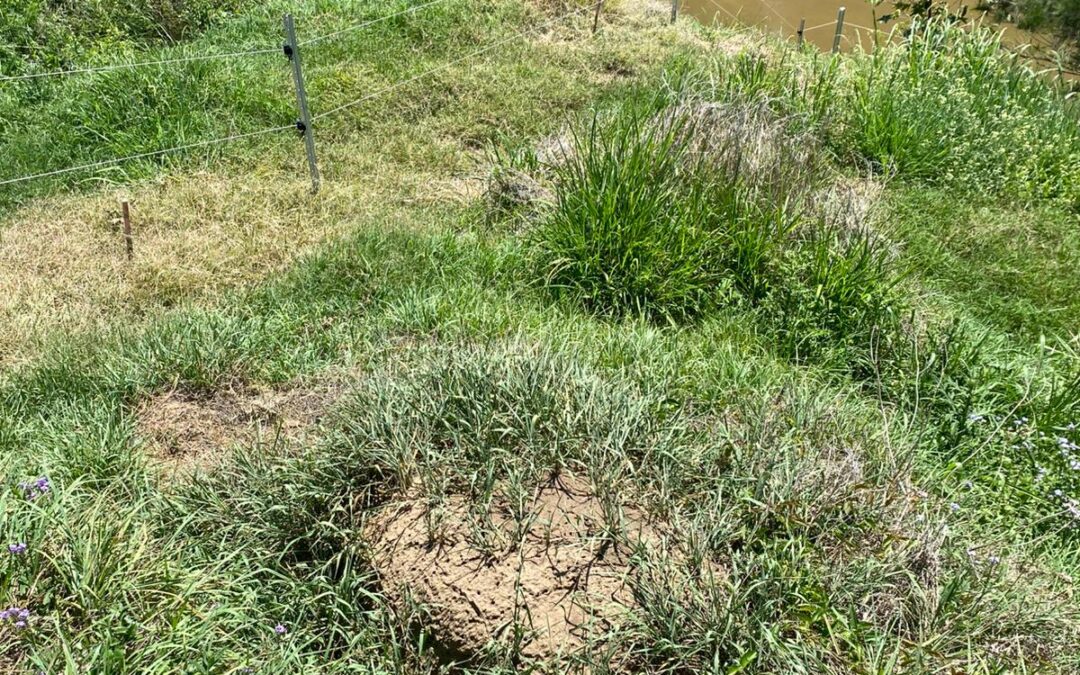
- Loose soil mounds with no visible entry hole
- Flattened or dome-shaped piles of fine soil
- Often found in lawns, garden beds, footpaths, paddocks, and near driveways
Unlike many ant species, fire ants enter and exit underground, not through a visible hole at the top.
In Queensland, nests can vary in size depending on colony age and soil conditions, making them easy to overlook until disturbed.
How Deep Is a Fire Ant Nest?
This is where DIY attempts usually fail.
A common question is: how deep is a fire ant nest?
Fire ant nests can extend:
- Up to 1.5 metres underground
- With complex tunnel systems spreading outward
- Containing multiple chambers for workers, brood, and queens
Pouring boiling water, chemicals, or fuel on the surface does not reach the core of the nest, especially the queens which is why many “destroyed” nests come back stronger.
Where Do Fire Ants Build Their Nests?
Another misconception is that fire ants only live in obvious mounds.
So, where do fire ants build their nests?
Common locations include:
- Lawns and turf
- Garden beds and mulch
- Under concrete slabs and pavers
- Around fence posts and retaining walls
- Along footpaths and road edges
- In paddocks and rural land
In urban Queensland, nests are frequently found in disturbed soil, especially after landscaping, construction, or heavy rain.
Do Fire Ants Nest in Trees?
Yes, occasionally, especially during flooding or heavy rainfall.
Fire ants may:
- Move into tree bases or hollow sections
- Build temporary nests in tree forks
- Climb trees aggressively when disturbed
However, trees are not their primary nesting site. If you’re seeing fire ants in trees, it usually indicates a nearby ground nest that has been disrupted.
How to Find a Fire Ant Nest (Safely)
Many people search for how to find fire ant nest solutions online and end up doing dangerous things.
Here’s what you should never do while trying to locate a nest:
- Poke the mound with a stick
- Dig into the soil
- Stamp or kick the mound
- Spray random insecticides
Fire ants respond instantly and aggressively when disturbed.
Safer signs to look for:
- Ants swarming rapidly after light surface vibration
- Ants climbing shoes or tools within seconds
- Multiple ants emerging from the soil at once
If you suspect a nest, mark the area and step away.
How to Identify Fire Ant Nest Queensland Homeowners Often Miss
Correct identification is critical in Queensland, where not all ants are fire ants, but fire ants must be handled differently.
Key identification signs include:
- Reddish-brown ants of varying sizes in the same nest
- Extremely aggressive behaviour
- Painful stings that form pustules
- Nests with no visible hole
Queensland fire ant nests are often misidentified as:
- Funnel ants
- Meat ants
- Coastal brown ants
Mistaking the species can lead to illegal or ineffective treatment. If you are unsure what species you are dealing with, we have a more in-depth guide on how to identify fire ants in Brisbane using photos and behaviour that can help you compare nests and visual cues.
What Homeowners Should Never Do
1. Never Pour Boiling Water on a Fire Ant Nest
This is one of the most common DIY methods and one of the worst.
Why it fails:
- Only kills ants near the surface
- Drives queens deeper or sideways
- Causes colonies to split (budding)
- Increases spread across your property
Instead of solving the problem, boiling water often creates multiple new nests.
2. Never Use Petrol, Diesel, or Household Chemicals
Using fuel or harsh chemicals is:
- Extremely dangerous
- Environmentally damaging
- Illegal in many cases
It contaminates soil, kills beneficial insects, and still does not eliminate queens.
- Never Dig Out a Fire Ant Nest
Trying to physically remove a nest:
- Exposes you to mass stings
- Causes ants to scatter instantly
- Almost guarantees colony survival
Fire ants are designed to survive disturbance.
4. Never Use Off-the-Shelf Ant Killers
Most supermarket ant products:
- Are designed for nuisance ants
- Kill workers only
- Do not reach underground queens
This leads to temporary reduction, followed by rapid reinfestation.
5. Never Ignore a Suspected Nest
Delaying action allows:
- Colony expansion
- Spread to neighbouring properties
- Increased risk to children and pets
In Queensland, reporting and treating early makes a huge difference.
Why Professional Fire Ant Nest Removal Works
Professional fire ant control is not about quick fixes, it’s about colony elimination.
Effective treatment includes:
- Correct species identification
- Use of approved fire ant-specific baits
- Treatments that reach queens underground
- Monitoring and follow-up
At The Fire Ant Guys, treatments are designed to:
- Eliminate entire colonies
- Prevent budding and spread
- Comply with Queensland biosecurity standards
How to Destroy a Fire Ant Nest (The Right Way)
If you’re searching for how to destroy fire ant nest, the safest answer is simple: Don’t do it yourself.
The only reliable way to destroy a fire ant nest is through targeted, professional treatment that eliminates the queens and prevents reinfestation.
DIY attempts often:
- Make the problem worse
- Spread ants to new areas
- Increase long-term costs
Final Thoughts: When in Doubt, Step Away
Fire ants are not a problem to experiment with.
If you suspect a nest:
- Do not disturb it
- Keep people and pets away
- Contact a professional fire ant specialist
Early, correct action protects your household, your neighbours, and Queensland’s environment.
This is where The Fire Ant Guys can help.
Our team specialises in identifying and treating fire ant nests across Queensland using approved methods that target the entire colony, including the queens hidden deep underground. We focus on eliminating nests properly, not just reducing visible activity, and we understand how fire ants behave in residential, rural, and commercial environments.
Early professional treatment makes a real difference. It helps protect your household, prevents spread to neighbouring properties, and supports wider eradication efforts across Queensland.
If you are unsure whether what you are seeing is a fire ant nest, getting expert advice early can save time, stress, and costly follow up treatments later. Contact us today.