
At The Fire Ant Guys, we regularly hear from Brisbane homeowners who are unsure whether the ants on their property are fire ants or a more common species. Fire ants are one of the most serious invasive pests affecting Brisbane and South East Queensland, and early identification is critical to limiting their spread.
Unlike common household ants that are mostly a nuisance, fire ants pose real risks to people, pets, livestock, and the local environment. Many of the properties we attend were first flagged after someone was stung or noticed unusual ant activity in a lawn, garden bed, or paved area. Because fire ants can resemble other ants at first glance, they are often misidentified, which delays the right response and allows colonies to grow.
In this guide, we explain how we identify fire ants in Brisbane by looking at their appearance, behaviour, nesting habits, and early warning signs. We also outline what we recommend doing if you suspect fire ants on your property.
Why correct fire ant identification matters
Fire ants are a restricted invasive species in Queensland, and sightings are treated seriously. From our experience, misidentification is one of the most common reasons infestations become established. When fire ants are mistaken for regular ants, people may ignore the problem or attempt DIY treatments, which can unintentionally cause colonies to spread.
Correct identification allows the situation to be handled appropriately and reduces the risk of painful stings, property damage, and spread to neighbouring properties. Fire ants behave very differently from most ants commonly found around Brisbane homes, and understanding those differences greatly improves early detection.
What fire ants look like in Brisbane
The fire ants we encounter in Brisbane are typically red imported fire ants. They are small ants, but one of the first things we look for is variation in size within the same nest. Fire ant colonies contain workers that range from very small to noticeably larger individuals, all moving together. This size variation is unusual among many other ant species, which tend to be more uniform.
In colour, fire ants are generally reddish-brown or copper-toned, often with a darker abdomen. They do not have the glossy black appearance of black house ants, nor are they as large or evenly sized as meat ants. While colour can vary depending on lighting and soil conditions, fire ants usually appear lighter and more reddish than many ants homeowners are familiar with.
When viewed closely, fire ants have a narrow waist, elbowed antennae, and a stinger at the rear of the body. The stinger is not always obvious unless the ant is actively stinging, but it is responsible for the painful reaction people experience. Because these features can be difficult to see without magnification, we often rely more on behaviour and nest characteristics during identification.
Fire ant behaviour we commonly see
Behaviour is one of the strongest indicators we use when identifying fire ants. Fire ants are highly defensive and aggressive when their nest or foraging area is disturbed. Unlike many ants that retreat, fire ants respond quickly and in large numbers.
When a nest is disturbed, fire ants swarm rapidly and climb onto whatever is nearby. We often hear from homeowners who were stung after ants climbed up their shoes, socks, or legs within seconds. Fire ants will also climb onto pets, outdoor furniture, play equipment, and tools left on the ground.
Fire ants can sting multiple times. Unlike bees, they do not lose their stinger and can sting repeatedly. The sting causes an immediate burning sensation, followed by the development of small white pustules within about 24 hours. These pustules are a common sign of fire ant stings and can become infected if scratched.
Another behaviour we regularly observe is their ability to climb smooth or vertical surfaces. Fire ants are often found on fence posts, garden edging, prams, play equipment, and electrical boxes. This climbing behaviour significantly increases the risk of accidental stings, particularly in family yards.
What fire ant nests look like
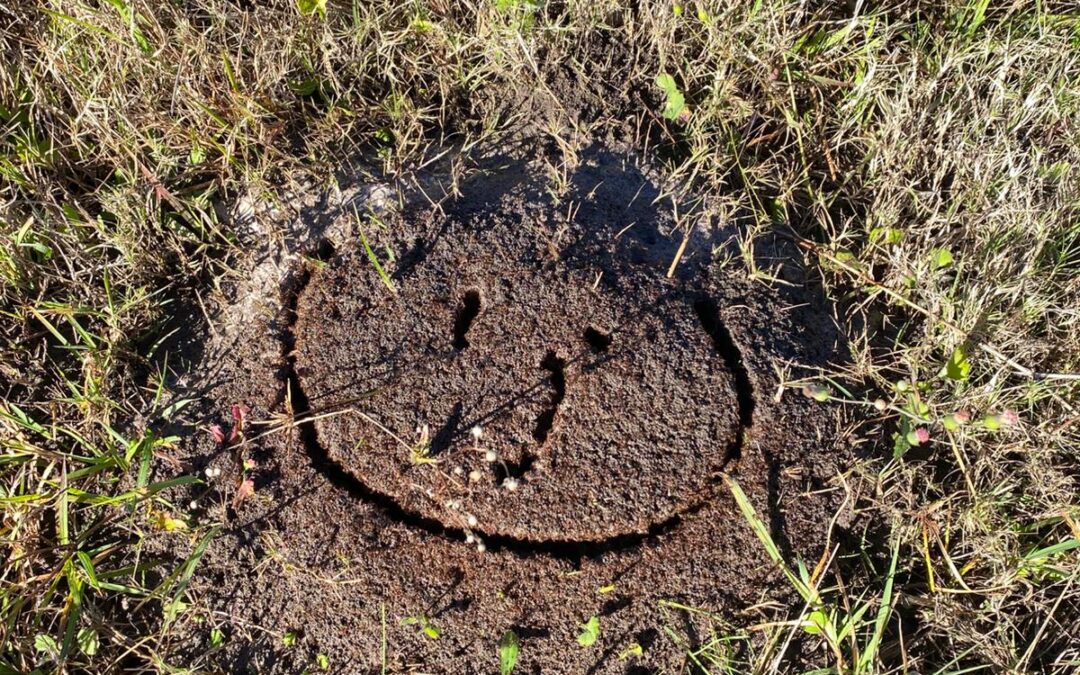
Fire ant nests are often the most visible sign of an infestation. On Brisbane properties, these nests usually appear as dome-shaped mounds of loose soil. They can vary in size but often grow quickly and may appear almost overnight.
One of the key characteristics we look for is the lack of a visible entry hole on the surface of the nest. Unlike many ant species that create a clear opening, fire ant nests tend to look smooth or slightly fluffy. When disturbed, ants emerge from multiple points rather than a single entrance.
Fire ant nests are commonly found in lawns, garden beds, along paths and paving, near irrigation systems, and around structures such as retaining walls and meter boxes. They tend to favour sunny, open areas with well-drained soil, but we also see them establish in shaded or disturbed locations. In some cases, nests are built close to buildings or hard surfaces, increasing the likelihood of human contact.
Early signs of fire ants around the home
In many cases, we are contacted before nests are clearly visible. One of the most common early warning signs is unexplained stings, particularly on feet and ankles after walking on grass or soil. These stings often occur suddenly, especially when a nest has been accidentally disturbed without being noticed.
Increased ant activity in open areas can also be an early indicator. Fire ants tend to forage openly during the day and are often seen moving aggressively across lawns, garden beds, or paved surfaces. Their behaviour around food is usually more intense and noticeable than that of common ants.
Over time, fire ant activity can affect lawn condition. Nest mounds disrupt turf, create uneven ground, and make mowing difficult. On properties with multiple nests, lawns can become lumpy or patchy as colonies continue to establish.
How fire ants differ from common Brisbane ants
We are often asked how fire ants differ from other ants commonly seen around Brisbane homes. Coastal brown ants are widespread but are generally less aggressive and do not form dome-shaped soil mounds without visible entrances. Meat ants are larger and more uniform in size, and their nests usually have clear openings. Black house ants are glossy, consistent in size, and rarely sting.
If ants vary in size, react aggressively when disturbed, and are associated with soil mounds, we treat fire ants as a strong possibility until proven otherwise.
What we recommend if you suspect fire ants
If you suspect fire ants on your property, we recommend avoiding disturbance of the area. Digging, mowing, or applying treatments can cause the colony to spread or relocate, making the situation harder to manage.
Keeping people and pets away from the suspected area helps reduce the risk of stings. Taking clear photos of the ants and any nests can assist with identification, particularly images that show size variation or mound structure.
Because fire ants are a regulated pest, professional assessment is important. Correct identification and appropriate treatment methods are essential to prevent further spread and ensure the issue is handled properly.
Why fire ants are a serious issue in Brisbane
From our experience working across Brisbane, the local climate and ongoing development create ideal conditions for fire ants to establish and spread. Colonies can reproduce quickly, and infestations often expand through soil movement, landscaping work, flooding, and construction activity.
Fire ants pose risks not only to households but also to public spaces, sporting fields, agriculture, and native wildlife. Once infestations become established, they are far more difficult and costly to control, which is why early detection remains so important.
When in doubt, take it seriously
If ants sting aggressively, swarm when disturbed, vary noticeably in size, or are associated with dome-shaped soil mounds, we always advise treating the situation seriously and seeking expert advice. Assuming ants are harmless can delay action and allow infestations to worsen.
Early identification helps protect not only your household but also neighbouring properties and the wider Brisbane community.
Fire ant identification support from The Fire Ant Guys
If you believe fire ants may be present on your property, timely advice from experienced specialists makes a real difference. Correct identification is always the first step in managing fire ants safely and effectively.
At The Fire Ant Guys, we provide specialist fire ant identification and treatment services across Brisbane. Our local experience allows us to assess suspected activity accurately and guide you on the appropriate next steps to help protect your property and reduce the risk of spread.
If something doesn’t seem right, acting early and seeking expert assistance is always the safest approach. Get in touch with our team today.
There are u usual ant nests on the footpath 39 -41 Jackson Street Clayfield
Is it possible for someone with more knowledge takes a look, please.
Hello Charles, thanks for letting us know. If you’re able to send us a few clear photos of the ants and nests, we’d be happy to take a look and advise whether they may be fire ants. You can contact us directly at info@thefireantguys.com.au.